Does Insurance Cover Roof Replacement? What Contractors Should Tell Homeowners
Kelvin Spratt
Founder, Supplement Snap · October 23, 2026 · Updated October 23, 2026
Key Takeaways
When homeowners insurance may pay for a new roof, when it usually does not, and how contractors can explain coverage without promising an outcome.
Preparing a supplement? Use the free checklist so nothing is missing when you submit.
The short answer
Homeowners insurance may pay for a roof replacement when the roof was damaged by a covered event, such as hail, wind or a falling tree. It generally does not pay to replace a roof that is simply old or worn out.
Whether a particular roof is covered depends on the policy, the cause of the damage and the carrier's decision. This guide is a general explanation for contractors who talk to homeowners every day, not advice on any one claim.
Covered events vs. wear and tear
Policies commonly cover sudden and accidental damage and exclude gradual deterioration. A hailstorm that bruises shingles is a different kind of loss than shingles that have reached the end of their life.
The line is not always obvious. A roof can be both old and storm-damaged, and the adjuster has to separate the two. That is why clear evidence of the damage matters. See how adjusters determine roof damage and how a hail damage inspection works.
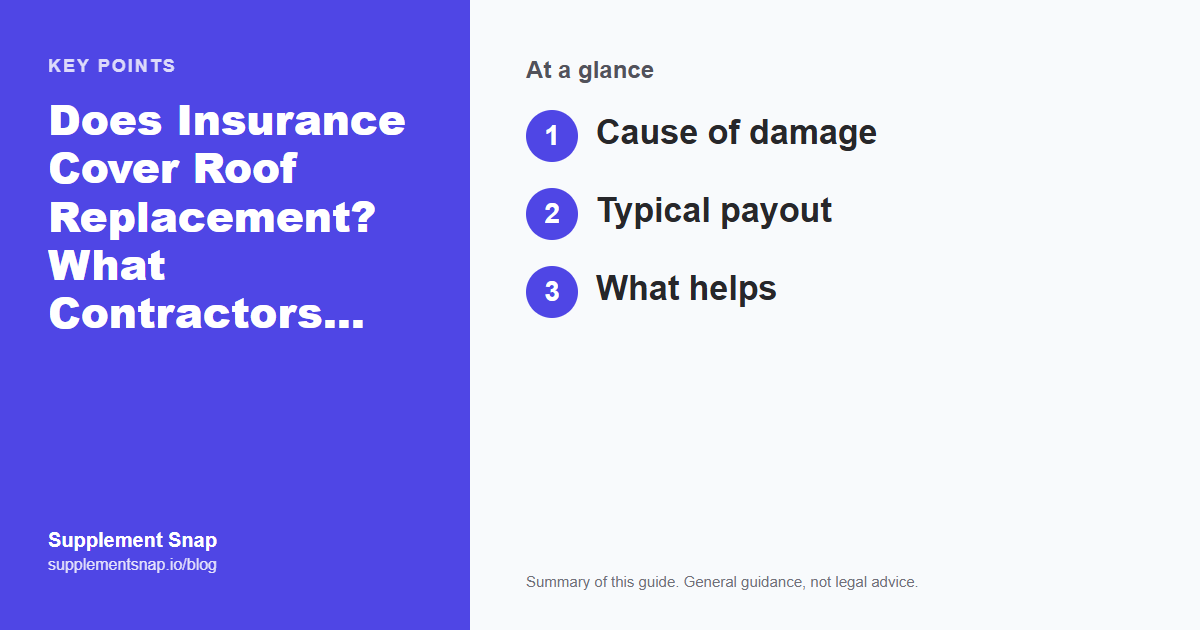
| Feature | Often considered | Often not covered |
|---|---|---|
| Cause of damage | Sudden events such as hail, wind or a fallen tree | Age, wear and tear, and neglected maintenance |
| Typical payout | Repair or replacement, minus the deductible | Usually no payment for the worn roof |
| What helps | Dated photos, an inspection and a clear report | Maintenance records that show upkeep |
Repair or full replacement
Having covered damage does not always mean a full replacement. The carrier may approve a repair for a limited area, or a replacement when damage is widespread. Matching issues, such as discontinued shingles or code requirements, can influence the scope, and the rules vary by state and by carrier.
Because scope is a common point of disagreement, contractors often document each slope and the specific findings. For the topic of repair thresholds, see the 25 percent rule for roofing.
Policy details that change the outcome
Several policy details change what a homeowner receives. Replacement cost coverage and actual cash value coverage pay differently. Some policies include a separate wind or hail deductible, often a percentage of the home's insured value. Some limit coverage for older roofs through a schedule, and some exclude cosmetic damage.
A homeowner should read their own policy or ask their agent. A contractor should avoid interpreting policy language for them. The checklist above is a good list of questions to hand over.
What to check in the policy
How contractors can help without overpromising
The most useful thing a contractor can do is document the roof well: dated photos, labeled findings and a written report. That helps the homeowner and the adjuster look at the same facts.
If the carrier approves the claim and the work reveals more damage, a supplement can request the additional items. See how contractors work insurance claims and what goes into a roof inspection report. Some states regulate what a contractor may say or do on a claim, so check your local rules.
What to say to a homeowner
A fair, honest script: "I can document what I see and give you a report. Whether your policy covers it is up to your insurance company. If they approve the claim and we find more damage during the work, we can submit a supplement."
It sets expectations and keeps you from guaranteeing an outcome you do not control.
Do not promise coverage
Coverage is decided by the carrier under the policy. Contractors can document damage and explain the process, but telling a homeowner their roof will be covered can create problems for everyone.
Where Supplement Snap fits
Supplement Snap helps roofing contractors capture and organize damage evidence during inspection and tear-off and send a clear report to the adjuster. It does not determine coverage or promise approval. Learn more or see the sample report.
Frequently asked questions
Does homeowners insurance cover a new roof?
It may when the roof is damaged by a covered event like hail or wind. It generally does not cover replacement due to age or wear. The policy and the carrier decide.
Will insurance replace a roof that is 15 or 20 years old?
Possibly, if a covered event damaged it, but some policies pay older roofs at actual cash value or limit coverage by age. Check the policy.
Does insurance pay for a roof leak?
It depends on the cause. A leak from storm damage may be covered, while a leak from wear or lack of maintenance often is not.
Can a roofing contractor tell me if my claim will be approved?
No. A contractor can document damage and explain the process, but the insurance company decides coverage.
What if the insurance estimate is too low?
A contractor can submit a supplement with documentation for missed items, and the homeowner can ask the carrier to review. Results depend on the claim.
References & Resources
Free tools and resources
Ready to streamline your supplement process?
Supplement Snap helps your crew capture hidden damage during tear-off and generate adjuster-ready reports in minutes.
Written by
Kelvin Spratt
Founder, Supplement Snap
Kelvin builds software for roofing contractors who are tired of leaving supplement money on the table. His background in software development and insurance restoration workflows drives everything Supplement Snap does.
More Articles
Shingle Matching on Roof Claims: What Roofers Should Know
Read more →
How Insurance Adjusters Determine Roof Damage (and What Documentation Helps)
Read more →
Hail Damage Roof Insurance Claims: What Contractors Should Document
Read more →
Roof Leak Insurance Claims: What Contractors Should Know
Read more →