Roof Tear-Off Cost in 2026: What Contractors and Homeowners Should Know
Kelvin Spratt
Founder, Supplement Snap · February 10, 2026
Average Tear-Off Cost
$1,000–$1,800
Per square (100 SF) including labor and disposal
Key Takeaways
What does a roof tear-off cost in 2026? Breakdown by roof size, material, pitch, and layers, plus hidden costs discovered during tear-off and how supplements recover them.
What is a roof tear-off and why does cost matter?
A roof tear-off is the process of removing all existing roofing materials down to the deck before installing a new roof system. Unlike a roof-over (where new shingles are layered on top of old ones), a tear-off gives contractors and homeowners a clean slate and a clear view of the decking and underlayment underneath.
Roof tear-off cost matters for two audiences. For homeowners, it is often the single largest line item on a roofing estimate and directly affects out-of-pocket expense or insurance claim value. For contractors, understanding real-world tear-off costs is essential for writing accurate bids, setting proper expectations, and identifying where supplement revenue hides.
In 2026, tear-off costs have risen compared to prior years due to increased labor rates, disposal fee hikes at many landfills, and material price volatility. Whether you are a homeowner evaluating quotes or a contractor building estimates, having current numbers prevents surprises and protects margins.
Average roof tear-off cost by roof size
Roof tear-off cost is most commonly measured per roofing square (one square equals 100 square feet). In 2026, national averages for a single-layer asphalt shingle tear-off look like this:
1,000 SF roof (10 squares): $1,000–$1,800 total
1,500 SF roof (15 squares): $1,500–$2,700 total
2,000 SF roof (20 squares): $2,000–$3,600 total
2,500 SF roof (25 squares): $2,500–$4,500 total
3,000 SF roof (30 squares): $3,000–$5,400 total
These ranges reflect a per-square cost of roughly $100–$180 for a standard single-layer asphalt shingle tear-off, including labor, debris removal, and dump fees. Keep in mind that these numbers cover tear-off only and do not include the cost of the new roof installation.
Regional variation is significant. Markets with higher labor costs (Northeast, West Coast, major metro areas) land at the upper end, while the Southeast and Midwest tend to fall at the lower end. Rural areas sometimes see lower labor rates but higher haul-off costs because the landfill or transfer station is farther away.
Factors that affect roof tear-off cost
No two tear-offs cost the same. Several variables push the price up or down significantly:
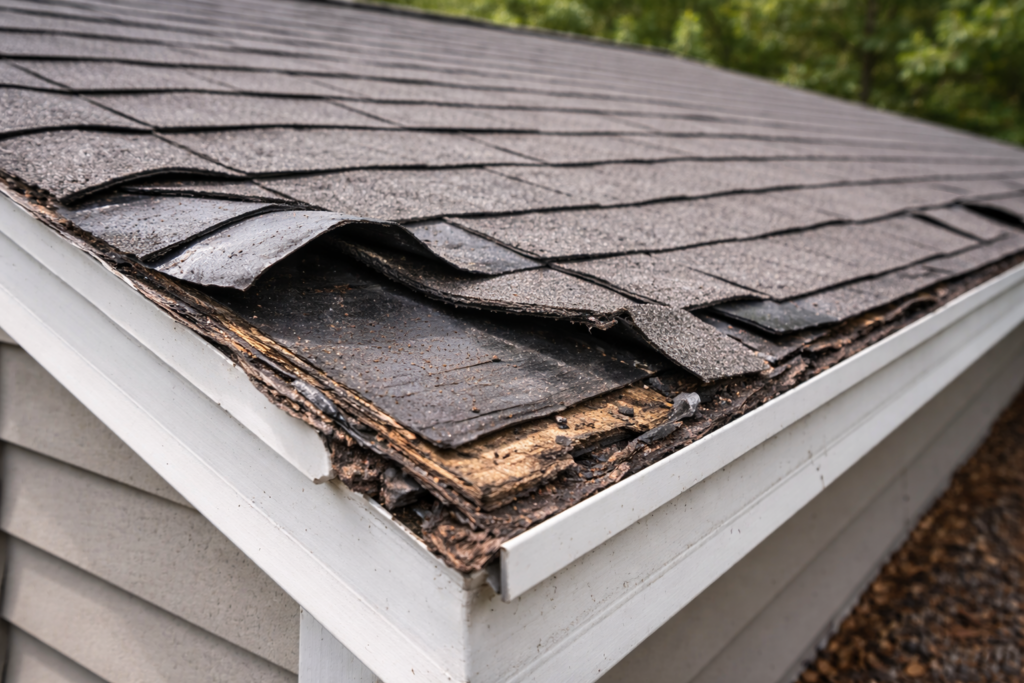
Number of layers: This is the biggest cost multiplier. A second layer of shingles can add $50–$100 per square to the tear-off cost because of the additional labor and disposal weight. A third layer (which some older homes still have) adds even more and often requires extra dump fees due to sheer volume. Many insurance estimates only account for a single layer because the adjuster cannot see beneath the surface during initial inspection.
Roofing material: Asphalt shingles are the easiest and cheapest to remove. Wood shake tear-offs run $150–$250 per square because shake is heavier, harder to strip, and creates more debris. Tile roofs (clay or concrete) are the most expensive at $200–$400 per square due to extreme weight (a single square of concrete tile can weigh over 900 pounds) and the need for specialized equipment to lower material safely.
Roof pitch: A walkable roof (6/12 pitch or less) keeps tear-off costs at the baseline. Once pitch exceeds 8/12, crews need additional safety equipment (harnesses, roof jacks, toe boards) and move more slowly, adding 15–30% to labor costs. Extremely steep roofs (12/12 and above) can nearly double labor time.
Roof access and height: A single-story ranch with a driveway next to the roof line is the easiest scenario. Multi-story homes, properties with limited ground access, landscaping that needs protection, or structures where the dumpster cannot be placed close to the building all increase cost because debris must be carried farther or lowered by hand.
Roof complexity: A simple gable roof tears off quickly. Add dormers, valleys, hips, skylights, chimneys, multiple penetrations, and satellite dishes, and the crew spends significantly more time working around obstacles. Each penetration also increases the likelihood of finding hidden damage beneath flashing.
Hidden costs discovered during tear-off
Here is where roof tear-off cost gets unpredictable, and this is where contractors leave the most money on the table. Once the existing roofing material comes off, the crew often discovers damage that was completely invisible during the initial inspection:
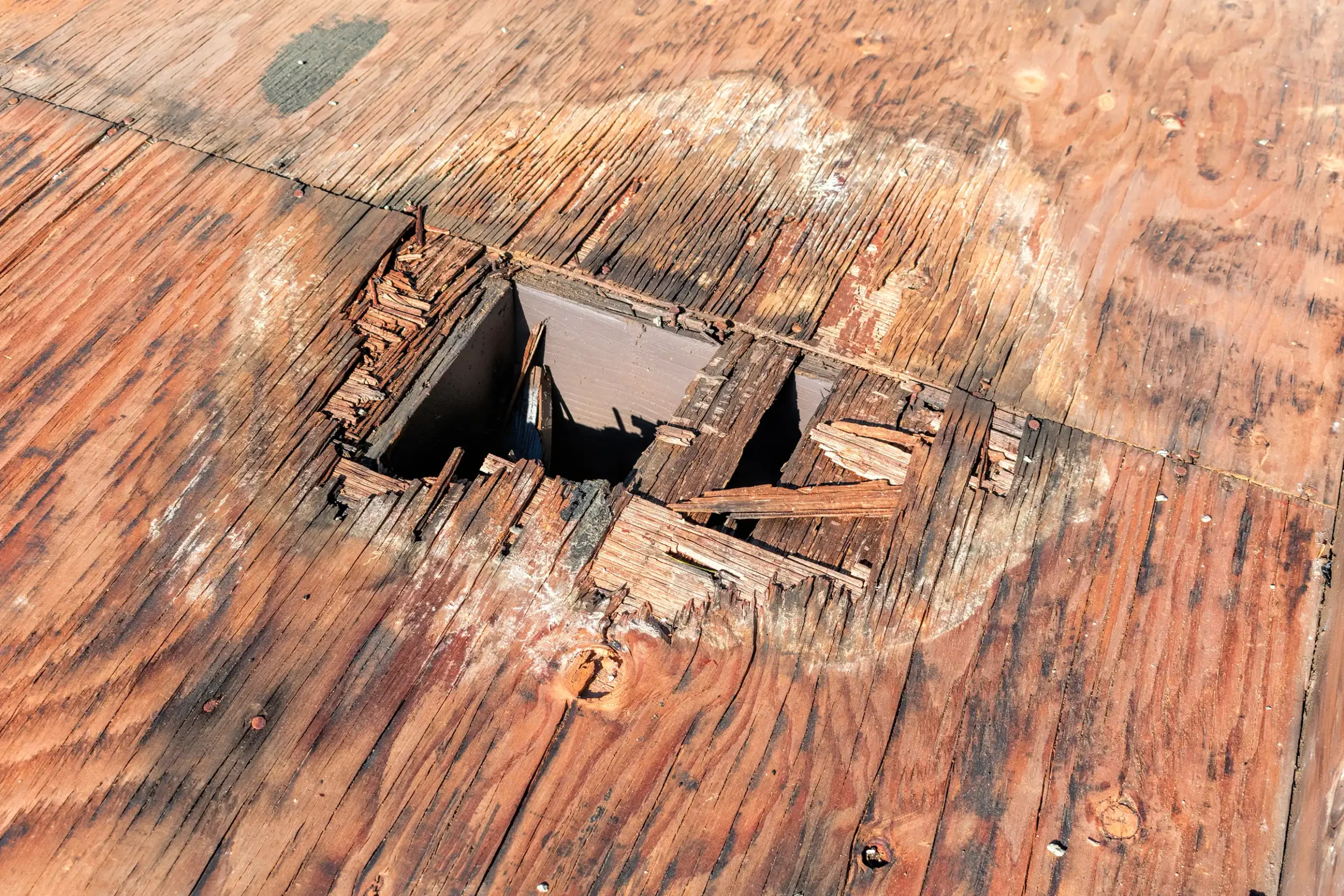
Rotted or deteriorated decking: Water intrusion over years softens plywood or OSB sheathing. Replacing damaged decking adds $2.00–$2.50 per square foot ($64–$80 per standard 4x8 sheet). It is not unusual to find 3–10 sheets of bad decking on a single job.
Failed or missing flashing: Step flashing at chimneys, counter flashing along walls, and valley flashing can be corroded, improperly installed, or completely absent. Replacing step flashing runs $8–$12 per linear foot, and most chimney reflashing jobs total $300–$800.
Missing ice and water shield: Many older roofs were installed before current building codes required ice and water membrane in valleys, at eaves, and around penetrations. Installing it during the reroof is code-required in most jurisdictions and adds $1.50–$2.00 per square foot.
Deteriorated pipe boots: Rubber pipe boots crack and separate after 10–15 years. Replacing each one costs $75–$100 including materials and labor.
Additional layer discovery: The adjuster estimated a single-layer tear-off, but the crew finds two or even three layers once they start pulling material. Each additional layer adds labor, time, and dump fees.
These hidden costs can add $1,500–$5,000 or more to the actual cost of the job. For insurance claims, this is the gap between what the adjuster originally approved and what the job actually requires.
How insurance estimates handle tear-off cost
On an insurance claim, the adjuster writes an estimate based on what they can see during a visual inspection, typically from a ladder or by walking the roof surface. The tear-off line item in the original estimate covers removing the visible roofing material. It does not cover what is hidden underneath.
This is by design. Insurance policies cover the cost to restore the property to its pre-loss condition, but the adjuster can only estimate what is visible. Concealed damage (rotted decking under shingles, corroded flashing behind step metal, a second layer of roofing hidden under the top layer) cannot be assessed until the roof is actually torn off.
The mechanism for recovering these hidden costs is the supplement. A supplement is a formal request to the insurance carrier to adjust the claim upward based on damage discovered during tear-off. It is a standard part of the insurance restoration process, and adjusters expect them on jobs where concealed damage is found.
The key to getting supplements approved is documentation. The carrier needs clear photographic evidence that the damage was hidden, that it was discovered during tear-off, and that the repair is necessary. Without documentation, the contractor absorbs the cost, and that directly erodes the profit margin on the job.
For homeowners, understanding the supplement process matters because it means their out-of-pocket cost should not increase when hidden damage is found. The insurance policy covers concealed damage; the contractor just needs to document it and submit the supplement.
How to reduce tear-off cost without cutting corners
For contractors looking to keep tear-off costs manageable while maintaining quality:
Optimize dumpster placement: Getting the dumpster as close to the roof edge as possible saves enormous labor time. Crews throw debris directly into the container instead of carrying it across the yard. On multi-story homes, consider using a roofing conveyor or chute.
Use proper tear-off tools: Shingle shovels, tear-off spades, and power tools like roofing tear-off machines on large commercial jobs speed up the process significantly. A well-equipped crew can tear off 25–35 squares per day on a standard residential roof.
Schedule dump runs strategically: Some landfills charge by weight, others by load. Know your local dump fee structure and time your haul-offs accordingly. Overloading a single dumpster may cost less than two partially filled ones.
Train crews on damage identification: Every minute of tear-off is an opportunity to spot supplementable damage. Crews that know what to look for, and how to flag it, turn tear-off into a revenue-generating activity instead of pure cost.
For homeowners evaluating contractor quotes, be wary of bids that seem unusually low on tear-off. A lowball tear-off number often means the contractor is cutting corners on cleanup, skipping proper deck inspection, or planning to hit you with change orders once the roof is open.
Recovering hidden tear-off costs with supplements
The single biggest financial opportunity during a roof tear-off is capturing and recovering the cost of concealed damage through supplements. On an average insurance reroof, contractors who document hidden damage properly recover an additional $1,500–$3,200 per job.
The challenge has always been the documentation workflow. Your crew is on the roof, moving fast, focused on getting the tear-off done and new materials installed. Stopping to take detailed photos, write notes, and measure damaged areas slows down production. And if documentation happens after the fact, back at the office from memory, it is usually incomplete.
This is exactly the problem Supplement Snap was built to solve. During tear-off, your crew captures damage photos directly in the app, tags the damage type and roof location, and adds a quick voice note describing what they found. The system generates a professional supplement narrative using AI, maps each finding to the correct Xactimate line codes, and produces a PDF report you can email to the adjuster the same day.
The result: hidden tear-off costs that used to eat into your margin become documented, submitted, and recovered. Instead of absorbing $2,000 in rotted decking and missing flashing, you turn it into a supplement that gets approved and paid. For contractors doing 10 or more insurance jobs per month, proper tear-off documentation can mean the difference between a tight year and a highly profitable one.
For more on why the initial estimate rarely matches the final cost, read roof replacement estimate vs final cost.
References & Resources
Ready to streamline your supplement process?
Supplement Snap helps your crew capture hidden damage during tear-off and generate adjuster-ready reports in minutes.
Written by
Kelvin Spratt
Founder, Supplement Snap
Kelvin builds software for roofing contractors who are tired of leaving supplement money on the table. His background in software development and insurance restoration workflows drives everything Supplement Snap does.