Debris Removal and Dumpster Costs on a Roof Claim
Kelvin Spratt
Founder, Supplement Snap · October 25, 2026 · Updated October 25, 2026
Key Takeaways
Haul-off and dumpster costs are part of most roof replacements. How to document extra layers and weight, and what to send the carrier.
Preparing a supplement? Use the free checklist so nothing is missing when you submit.
The short answer
Removing and hauling off old roofing is a standard part of a replacement, and carriers usually include some disposal in the estimate. When a roof has more layers than expected, or extra material comes off, the load can be larger than the estimate assumed. Document the layers, the extra material and the actual disposal records, then ask for the difference.
Disclosure: we make Supplement Snap, which helps roofing crews document damage found at tear-off and export a report. It does not decide coverage, negotiate claims or guarantee approval. This page is general guidance, not legal or claims advice.
Free download
Roof tear-off findings log
A log for the roof: where each finding is, what it is, how much, and which photos show it, with a checklist before you leave.
Fillable PDF: open it in a PDF reader such as Adobe Acrobat Reader to type into the blanks. Some phone and browser previews cannot.
See all free roofing templates →
No email or sign-up needed. General guidance, not legal advice. Adjust it to your carrier's, client's and state's requirements.
What to document
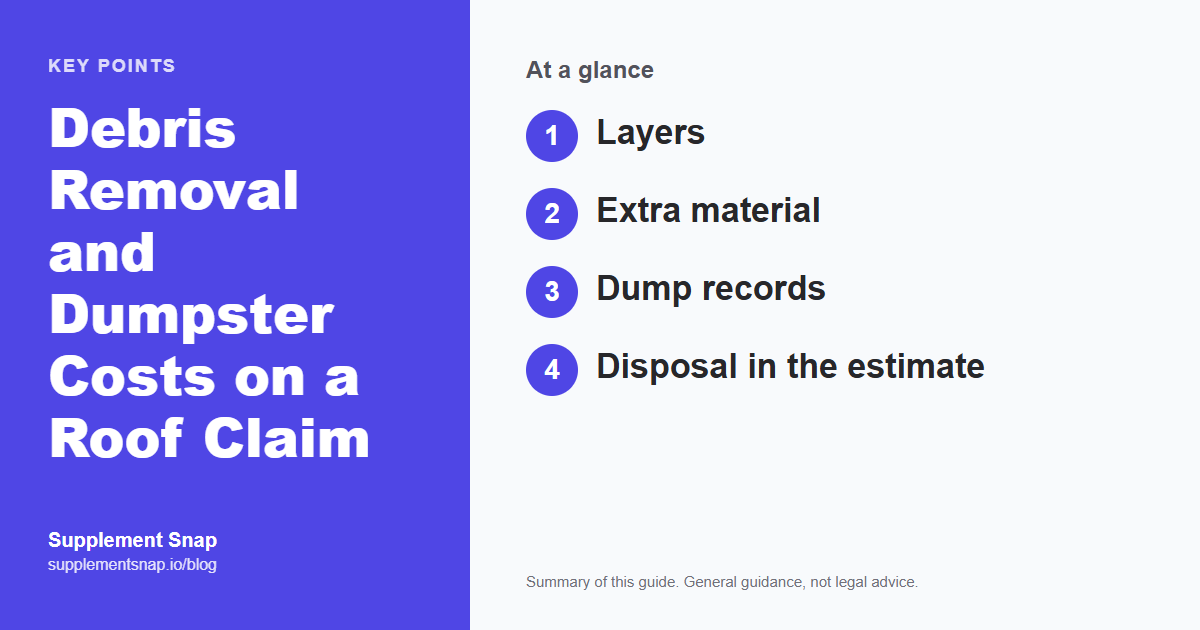
The table lists what to keep. Photograph the roof edge before tear-off to show the number of layers, and photograph the debris pile or dumpster as it fills. Keep every dump ticket.
| Feature | What to keep |
|---|---|
| Layers | Photos of the edge showing how many layers came off |
| Extra material | Notes on decking, felt or other material that added to the load |
| Dump records | Tickets or receipts, with the date and the address or claim number |
| Disposal in the estimate | What the carrier's estimate included, so you can compare |
Document the load, not just the bill.
Supplement Snap helps your crew log extra layers and conditions found at tear-off. Your first project is free.
Extra layers
Many places limit how many layers can be on a roof, and removing all layers may be needed for a proper install. A photo of the edge at tear-off and the local requirement are the support. Local rules vary. Policy wording, state rules and carrier practice vary, so confirm the details for your job.
Comparing to the estimate
Find the tear-off and disposal lines in the carrier's estimate and note the quantity and unit. Compare them with your count of layers and with actual disposal records. Write the numbers side by side.
Layers change the load
A second layer of shingles roughly doubles what comes off. Photograph it at the edge before tear-off.
How to word the request
Example: Tear-off of second layer, 28 squares, photo 2 shows two layers at the rear eave. Disposal tickets attached, 3 loads. List the difference as its own finding.
A worked example (fictional numbers)
A crew finds two layers of asphalt shingles on a 32 square roof. The edge photo at the rake shows both layers. The carrier's estimate prices tear-off of one layer, 32 squares. The contractor's request lists the second layer as its own finding, 32 squares, with the edge photo and a dump ticket showing the weight of the loads that came off.
The quantities here are made up. The point is the structure: one photo of the condition, one measurement and the receipts.
Weight, loads and tickets
Disposal costs are often based on weight or on the number of loads. A ticket from the transfer station or landfill shows the weight, the date and the vehicle. Dumpster rental invoices show the size and the days. Keep them and write the claim number or address on each. If the load includes material from other jobs, do not claim it for this job.
Wet and heavy material
Wet underlayment, rotted decking and extra layers all add weight. If rain fell before tear-off, note it. Do not exaggerate the effect. Say what the debris contained and attach the ticket.
Protecting the property
Tarps, plywood on landscaping and magnet sweeps are part of cleaning up. Photograph them in place. Whether the carrier pays for them is up to the policy and the estimate, but the photos show the care taken and can support a conversation.
Frequently asked questions
Does insurance pay for roof debris removal?
Disposal is commonly included in a replacement estimate. Extra amounts depend on the policy and what you can show.
How do I prove there were two layers?
Photograph the edge of the roof before tear-off, ideally with a tape showing thickness.
Do I need dump tickets?
Keep them. They show actual disposal and date.
Is the second layer covered?
That depends on the carrier and policy. Documentation lets them review it.
Can I include dumpster rental?
Many contractors do when it is a real cost of the job. Show the receipt.
Is haul-off included in the price per square for tear-off?
In some estimates it is a separate line and in others it is combined. Read the line description before you request more.
What if the dump ticket covers multiple jobs?
Do not use a combined ticket as proof for one job. Ask the facility for a ticket for each job or note the split.
References & Resources
Free tools and resources
Ready to streamline your supplement process?
Supplement Snap helps your crew capture hidden damage during tear-off and generate adjuster-ready reports in minutes.
Written by
Kelvin Spratt
Founder, Supplement Snap
Kelvin builds software for roofing contractors who are tired of leaving supplement money on the table. His background in software development and insurance restoration workflows drives everything Supplement Snap does.