The Appraisal Clause on a Roof Claim: How It Works
Kelvin Spratt
Founder, Supplement Snap · October 25, 2026 · Updated October 25, 2026
Key Takeaways
When a homeowner and carrier disagree on the amount of a roof loss, the policy may offer appraisal. What it is, how it generally works and what to prepare.
Preparing a supplement? Use the free checklist so nothing is missing when you submit.
The short answer
Many property policies include an appraisal clause for disputes about the amount of a loss. If the homeowner and the carrier agree the damage is covered but not on how much it costs, appraisal may be a way to settle the number. It is a formal process with its own rules and cost, so it is not a first step. This page is a general overview.
Disclosure: we make Supplement Snap, which helps roofing crews document damage found at tear-off and export a report. It does not decide coverage, negotiate claims or guarantee approval. This page is general guidance, not legal or claims advice.
How it generally works
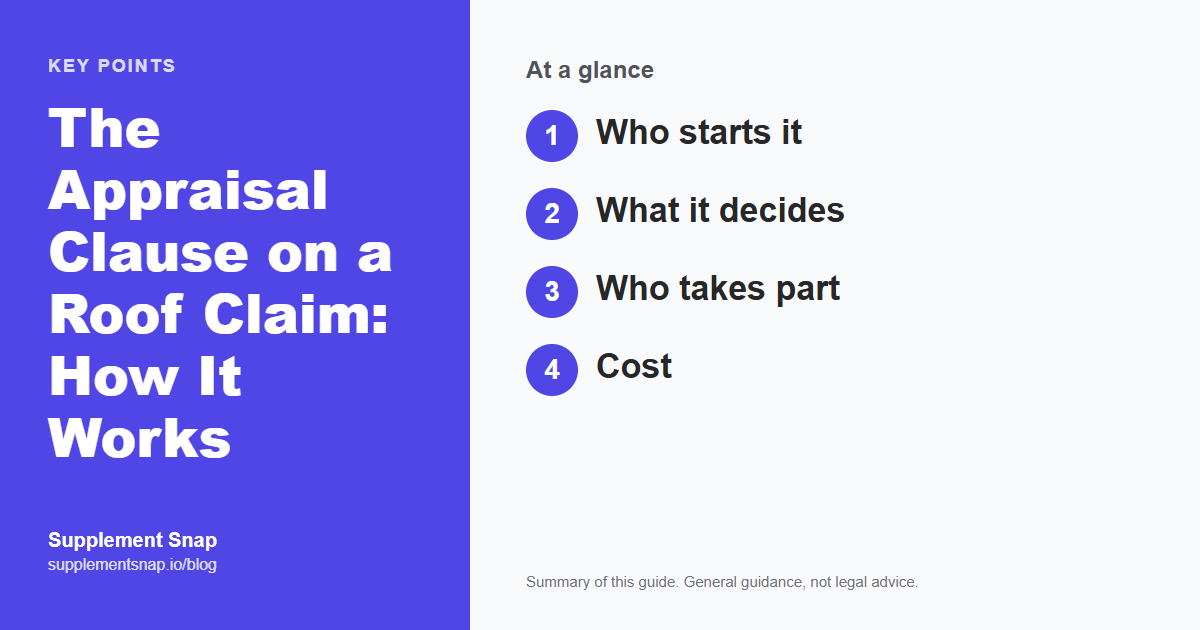
The table gives the usual shape. Each side picks an appraiser. The two appraisers try to agree on the amount. If they cannot, they ask an umpire to help decide. An agreement by two of the three is typically binding on the amount, subject to the policy and state law.
| Feature | Typically |
|---|---|
| Who starts it | Often either side can demand it, if the policy has the clause |
| What it decides | Usually the amount of loss, not whether the policy covers it |
| Who takes part | An appraiser for each side and an umpire if they disagree |
| Cost | Each side usually pays its own appraiser and shares the umpire; check the policy |
Good records help in every dispute path.
Supplement Snap keeps photos, notes and findings together by project. Your first project is free.
What it does not do
Appraisal usually does not decide whether the loss is covered under the policy. Coverage disputes can follow a different path. A homeowner who is unsure which kind of dispute they have can ask the carrier or an attorney.
Where a contractor fits
A contractor is a witness to conditions and a source of documentation. Appraisers may look at your photos, measurements and estimates, so keep them organized. A contractor with a financial interest generally should not act as the homeowner's appraiser, and local rules vary.
Policies differ
Some policies word appraisal differently, and state law can change how it works. Read the clause and ask your state insurance department or an attorney.
What to prepare
Collect photos with dates and locations, tear-off notes, measurements, estimates and the carrier's documents. Number everything and keep a clear index. Policy wording, state rules and carrier practice vary, so confirm the details for your job.
Before you start
Appraisal can take time and cost money. Often a well-documented supplement or reinspection resolves the gap sooner. If it comes to appraisal, the homeowner should read the policy and consider professional advice.
A timeline of what usually happens
First the homeowner and the carrier disagree on the amount. Then one side makes a written demand for appraisal under the policy. Each side names an appraiser. The two appraisers try to agree on the amount of loss. If they cannot, they select an umpire, and an agreement between the umpire and one appraiser is generally what sets the amount. Timelines, deadlines and notice requirements come from the policy and state law, so read them closely.
Documents appraisers like to see
Appraisers typically want the carrier's estimate, the contractor's estimate or supplement, dated photos, measurements, receipts, and a clear list of the items in dispute. A one-page summary that lists each disputed item, the carrier's number, the other side's number and the page where the evidence is makes their work faster.
Costs and tradeoffs
Appraisers charge for their time, and the umpire's fee is usually shared. Compare the likely cost with the amount in dispute. Sometimes a stronger supplement or a reinspection resolves a smaller gap more cheaply. Sometimes appraisal is the right tool for a larger gap. The homeowner makes that call, ideally after reading the policy and talking with their agent or an attorney.
What a contractor should not do
Do not tell the homeowner that appraisal will get them more money. Do not act as an appraiser if you have a financial stake in the job. Do not draft legal demands unless you are licensed to. Do give accurate documents and answer questions about the condition of the roof.
Frequently asked questions
What is the appraisal clause?
A policy provision that can allow an appraisal process for disputes about the amount of a loss.
Does appraisal decide coverage?
Usually no. It deals with the amount of loss. Coverage questions are handled differently.
Who pays for appraisal?
Policies commonly have each side pay its appraiser and share the umpire. Check the policy.
Can a roofer be the appraiser?
Appraisers are generally expected to be impartial, and a contractor with a stake usually should not. Rules vary.
Should I try a supplement first?
Often, yes. A supplement or a reinspection can resolve missed items faster and cost less.
Is appraisal the same as going to court?
No. Appraisal is a policy process for deciding the amount of a loss. Court is a separate legal route. Which one applies depends on the policy and the dispute.
Can the carrier refuse appraisal?
Policies and state laws differ on when appraisal can be demanded and what it can decide. The homeowner should read the clause and ask their state insurance department or an attorney.
References & Resources
Free tools and resources
Ready to streamline your supplement process?
Supplement Snap helps your crew capture hidden damage during tear-off and generate adjuster-ready reports in minutes.
Written by
Kelvin Spratt
Founder, Supplement Snap
Kelvin builds software for roofing contractors who are tired of leaving supplement money on the table. His background in software development and insurance restoration workflows drives everything Supplement Snap does.
More Articles
Insurance Lowball Roof Estimate: What Roofers and Homeowners Can Do
Read more →
Roofing Supplement Denied? Here's What to Do Next
Read more →
How to Request a Reinspection on a Roof Claim (and When a Supplement Fits Better)
Read more →
Can a Roofer Talk to the Insurance Company? What Contractors May and May Not Do
Read more →